
School’s Out, Work’s In: How to Balance Parenting and Self-Employment During School Vacation
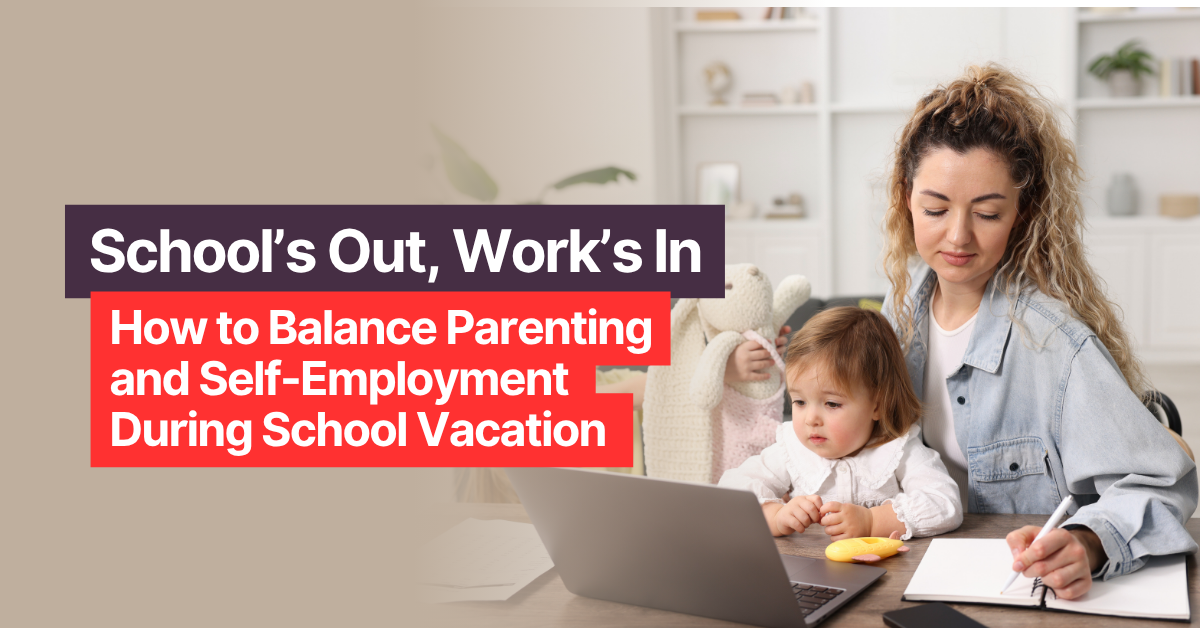
School vacation has a way of disrupting even the most well-structured routines. If you’re self-employed or running your own business, that disruption can feel even more pronounced.
For many working parents, especially those with flexible but demanding careers, school breaks become less of a “break” and more of a logistical balancing act. The goal isn’t to get through it perfectly. Instead, it’s to navigate it thoughtfully, so both your work and your family get what they need, without unnecessary stress.
Let’s talk about some practical ways to do that.
Start by Resetting Expectations
One of the biggest challenges during school breaks is managing expectations, not time.
If you expect your workdays to look exactly the same as they do during the school year, you’re setting yourself up for frustration. The same is true if you expect to be fully present with your kids while also maintaining a full workload.
Instead, it helps to acknowledge upfront that this is a temporary shift. You may not be as available and your schedule may be more fragmented, and that’s okay. Short-term adjustments doesn’t derail long-term progress.
Give Yourself Grace
When your day is pulled in multiple directions, it’s easy to fall into reactive mode. Whether that’s answering emails in between activities or squeezing in work wherever you can, you’ll feel like nothing is getting your full attention. Try your best not to beat yourself up and if you can identify a few “anchor blocks” in your day.
That might look like:
Focused work time in the morning before the day gets busy
A mid-day break dedicated to family time
A shorter work block in the afternoon or evening
The exact structure will vary, but the principle is the same: fewer, more intentional work periods tend to be more effective than trying to work all day in fragments.
Plan and Budget for Support Where You Need It
Spring break often comes with unexpected costs, such as childcare, activities, or simply more meals and outings. Rather than treating those as disruptions, it can help to plan for them in advance when possible. Even a small, temporary increase in spending to create a bit of structure can make the week run much more smoothly.
For self-employed professionals, this is also a reminder that your time has value. Creating space to focus on work, even for a few hours at a time, can help you maintain momentum without feeling constantly behind.
Communicate Early and Simply
If your schedule will be different during spring break, it’s worth letting clients or collaborators know ahead of time. This doesn’t need to be a long explanation. A simple note such as:
“I’ll be working on a slightly adjusted schedule this week due to school break, but I’ll still be available and responsive.”
Sets expectations and reduces pressure on both sides. Clear communication is often the difference between feeling behind and feeling in control.
Give Yourself Permission to Be Flexible
There’s a natural tendency, especially among high performers, to try to optimize everything. But spring break isn’t a normal week, and it doesn’t need to be treated like one.
Some days will feel productive, others won’t. Some plans will work, others will fall apart. That’s part of the rhythm of balancing work and family. Stepping back from the idea of a “perfect” week makes it easier to adapt and move through it without unnecessary stress.
Remember to Take a Break, Not Reach a Breaking Point
Balancing parenting and self-employment during spring break is about making small, thoughtful adjustments that support both your work and your family for a short period of time. A reset in expectations, a bit of structure, and a willingness to plan ahead can go a long way. I your finances and your business are set up with flexibility in mind, moments like this become easier to navigate.
At Hark, we work with self-employed professionals and busy families to build financial systems that support real life, not just ideal scenarios. Because the goal isn’t to simply eliminate disruptions, it’s to be prepared for them.